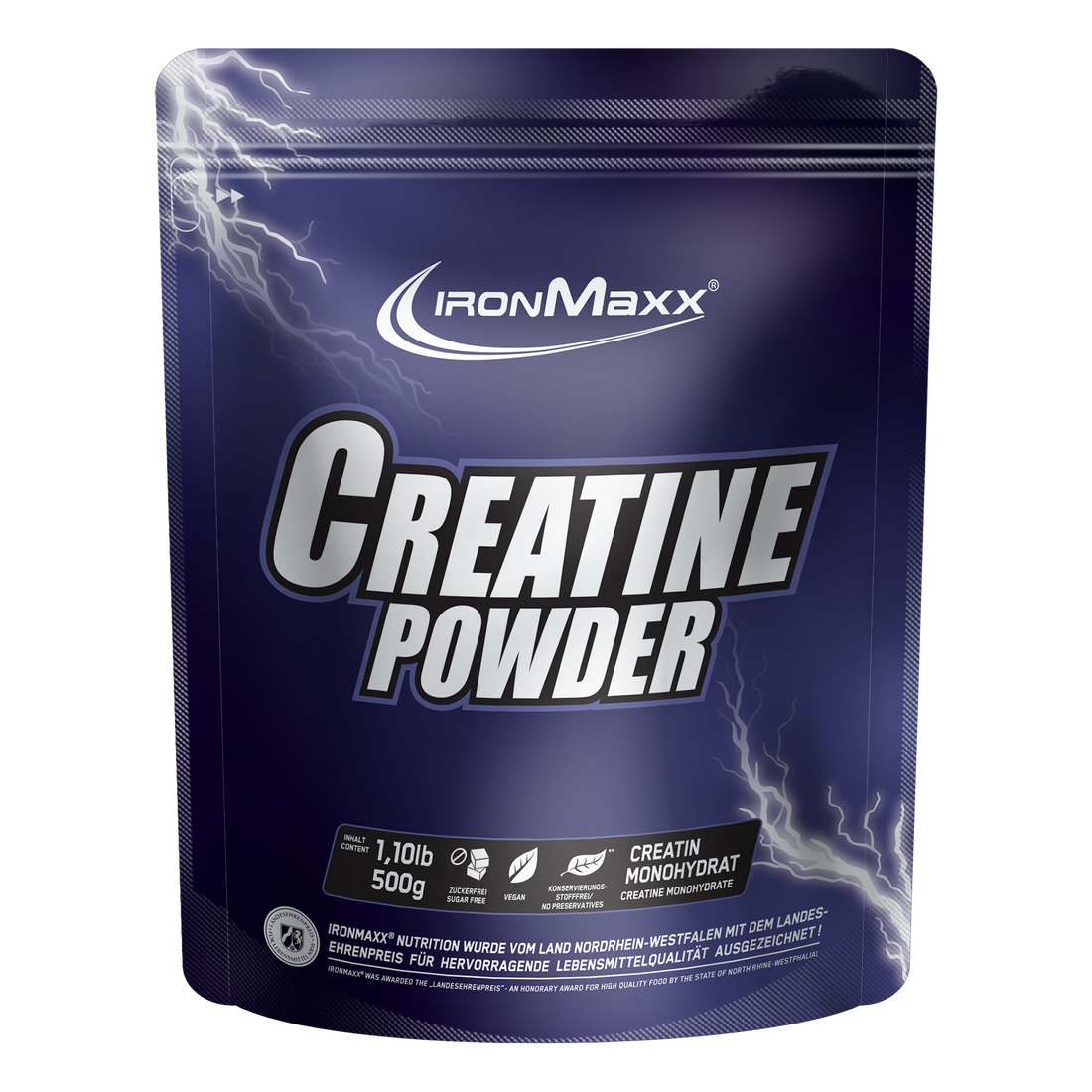
Creatine is one of the most trusted and scientifically backed supplements in the sports world. Whether you're lifting heavy, sprinting, doing CrossFit, or simply looking to boost your daily performance, creatine helps you train harder and recover faster. In this guide, we break down what creatine is, how it works, and which
What is creatine?
Creatine is a naturally occurring compound stored mainly in your muscles. It plays a key role in producing ATP (adenosine triphosphate) — the main energy source your body uses for quick, explosive movements.
This makes creatine especially valuable during:
- Heavy weightlifting
- Sprinting & intervals
- HIIT-style training
- Short, high-intensity workouts
Your body produces small amounts of creatine, and you absorb some from foods like meat and fish. However, supplementation helps your muscles reach full saturation, leading to better strength, power, and performance — especially if you train frequently or follow a plant-based diet.
How Does Creatine Work?
When your muscles have more creatine stored, they can produce ATP faster. This means:
- More explosive power
- Better strength performance
- Faster recovery between sets
- More efficient high-intensity training
In other words, creatine helps you push further, lift more, and recover quicker.
Top Benefits of Creatine
- Increased strength and power output
- Better performance during short, intense efforts
- Faster recovery between sets
- Supports muscle growth through improved training quality
- Safe and effective for long-term use
With a daily intake of 3 g, creatine already supports improved performance.
Is Creatine Safe? Debunking Myths
Creatine is one of the most researched supplements in the world, and studies consistently show that it is safe for healthy individuals.
Common Misconceptions
- “Creatine causes kidney damage.” → Not true for healthy users.
- “Creatine is similar to steroids.” → Completely false; it is not hormonal.
- “You will gain fat or bloat.” → Creatine may increase water inside your muscles, not under your skin.
Possible Mild Side Effects
- Bloating (usually when taking high doses too quickly)
- Stomach discomfort (rare and often dose-related)
💧 Tip: Drink 2-3 liters of water per day to support creatine absorption and reduce side effects.
How to Take Creatine
Daily Dosage
3–5 g per day — most effective in the long-term.
Optional loading phase: 20 g per day for 5–7 days (4 × 5 g).
timing
Whether you take it before training, after training, or in the morning doesn't matter — consistency is what counts.
Mixing Options
- In water
- In a protein shake
- With carbohydrates (eg, maltodextrin)
- As capsules or sticks on the go
Who Should Take Creatine?
- Strength athletes & bodybuilders
- CrossFit athletes
- Sprinters & team sports players
- Vegans & vegetarians (lower dietary creatine intake)
- Women (great for strength, energy & muscle tone)
- Seniors (supports muscle function)
Even beginners benefit from creatine after just a few weeks of consistent use.
IronMaxx ® Creatine Products: Which One Is Right for You?
- Creatine Caps — Convenient, pre-dosed capsules for easy daily use.
- Creatine Flavored Zero — Tasty flavored creatine powder (eg, Cherry or Tropical).
- Creatine Monohydrate Powder — Pure, classic, neutral creatine.
- Creatine Sticks with Creapure® — Premium Creapure® in single-serving sticks.
- Krea7 Superalkaline — Advanced multi-creatine complex with seven creatine forms.
How Long Until Creatine Works?
Creatine isn't a pre-workout — it builds up in your muscles over time. Most people feel noticeable improvements after 2-3 weeks of daily intake. 3 g per day is already enough to increase performance.
Final Thoughts
Creatine is one of the simplest, safest, and most effective supplements you can add to your routine. Whether you want to increase strength, improve explosiveness, or boost overall workout quality, creatine supports your goals quickly and reliably.
With high-quality